From when is e-invoicing mandatory for my business in India?+
E-invoicing is mandatory for all businesses with Aggregate Annual Turnover (AATO) exceeding ₹5 crore in any financial year from 2017–18 onwards (effective 1 August 2023 under Notification No. 10/2023–Central Tax). Any business that crossed ₹5 crore in FY 2025–26 became newly required to comply starting 1 April 2026.
What is an IRN (Invoice Reference Number) and how is it generated?+
An IRN is a unique 64-character hash computed by the Invoice Registration Portal (IRP) using the SHA-256 algorithm on supplier GSTIN, document number, document type, and financial year. Once validated, the IRP digitally signs the invoice JSON and attaches a signed QR code containing key invoice parameters.
What is the 30-day reporting rule on the IRP, and what happens if I miss it?+
Taxpayers with AATO of ₹10 crore or more must report invoices to the IRP within 30 days of the invoice date (effective April 1, 2025). The IRP strictly blocks/rejects IRN generation for invoices older than 30 days. Under GST Rule 48(5), any document without an IRN is legally treated as if no invoice was issued, making it invalid for recipient Input Tax Credit (ITC).
Can I generate an e-Way Bill simultaneously with an e-Invoice?+
Yes. When providing vehicle number or transporter ID (Part-B details) along with invoice payload, WhiteBooks generates both the IRN and the e-Way Bill number in a single API call to the IRP/NIC system. Both the signed QR code and EWB number print on your invoice PDF.
Can I cancel an IRN after generation, and what happens after 24 hours?+
You can cancel an IRN directly on the IRP within 24 hours of generation, provided an active e-way bill is not attached. After 24 hours, GSTN rules prohibit cancellation on the IRP; you must issue an amendment or a credit note linked to the original IRN. WhiteBooks automatically supports both workflows.
What is AATO and how is it calculated?+
AATO stands for Aggregate Annual Turnover. It is calculated across all GSTINs registered under the same PAN nationwide, including taxable supplies, exempt supplies, exports, and inter-state supplies of goods/services, but excluding GST taxes. WhiteBooks reads your AATO and applies the appropriate compliance window automatically.
What happens if the IRP is down or experiencing latency?+
WhiteBooks queues your invoice generation requests through IRP outages and retries automatically with exponential backoff. You see queue status in real time and can override priority on critical dispatch invoices without stalling your warehouse operations.
Does WhiteBooks support e-invoicing for export and SEZ transactions?+
Yes. WhiteBooks handles export with payment of IGST, export without payment under LUT, SEZ supplies with payment, and SEZ supplies without payment. It automatically validates foreign currency codes, port codes, shipping bill numbers, and country masters per the latest GST schema.
What is the difference between B2B e-invoicing and B2C dynamic QR codes?+
B2B e-invoicing applies to businesses with AATO > ₹5 crore, requiring reporting to the IRP to get a signed IRN and QR code. B2C dynamic QR code applies to entities with AATO > ₹500 crore, requiring a payment-enabled dynamic QR code printed on invoices to end consumers so they can pay via UPI/banking apps. WhiteBooks supports both.
How does WhiteBooks e-Invoice Software differ from the e-Invoice API?+
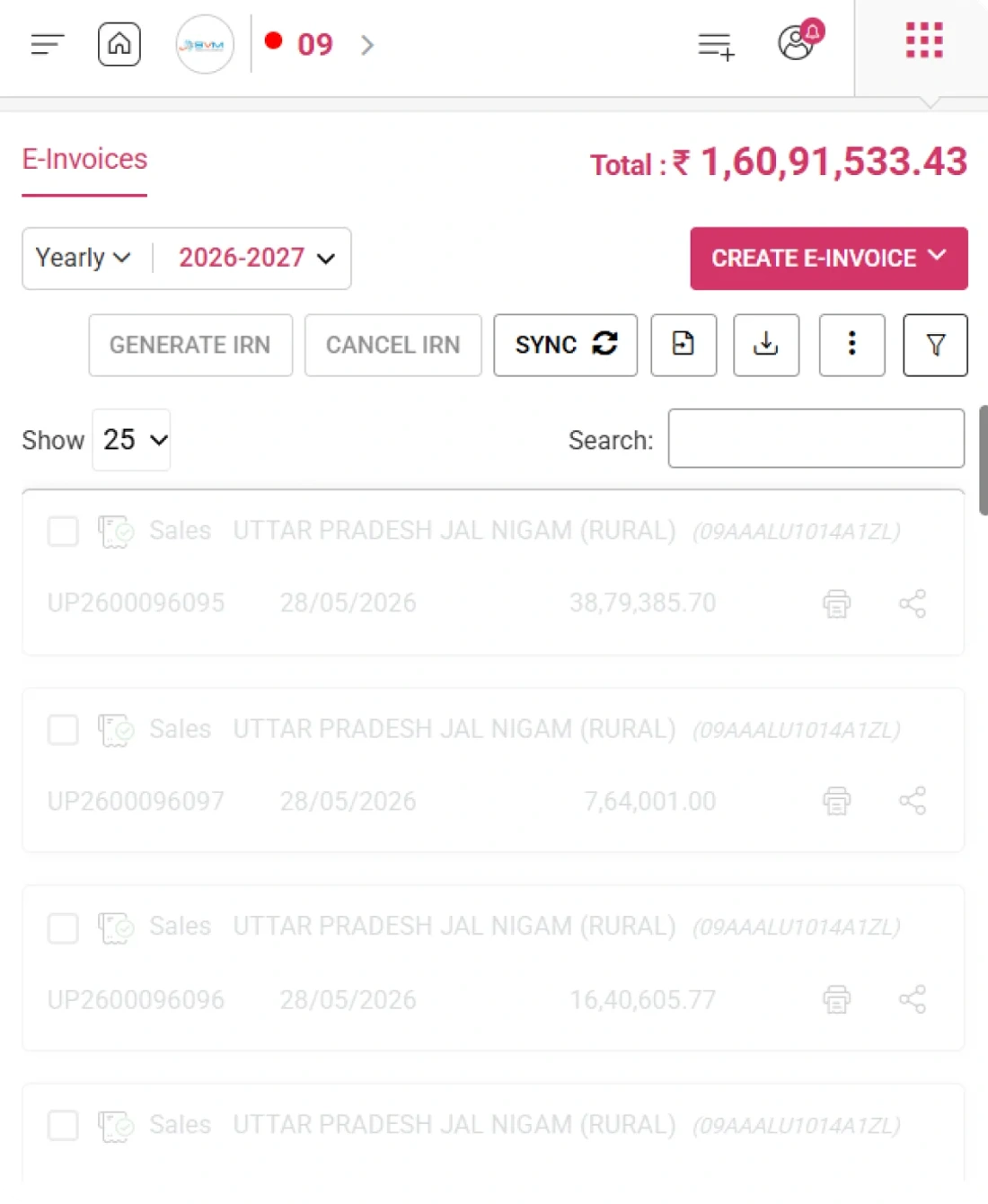
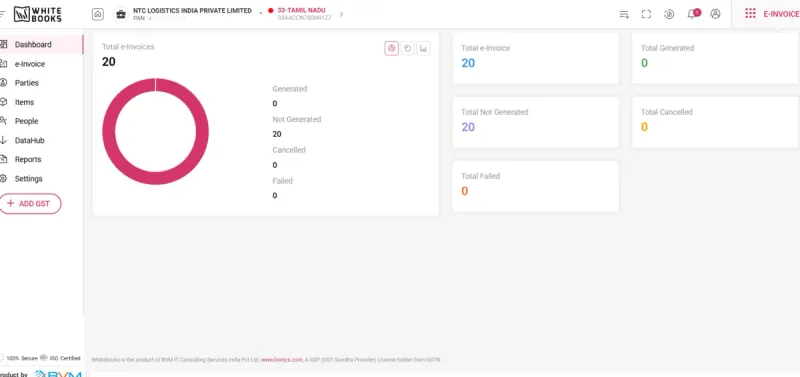
e-Invoice Software is the full web application featuring user management, bulk Excel upload, print designer, exception dashboards, and role-based permissions for finance teams. The e-Invoice API is the underlying developer engine offering direct REST endpoints with SDKs in Python, Node.js, Java, and Go for custom ERP integration.